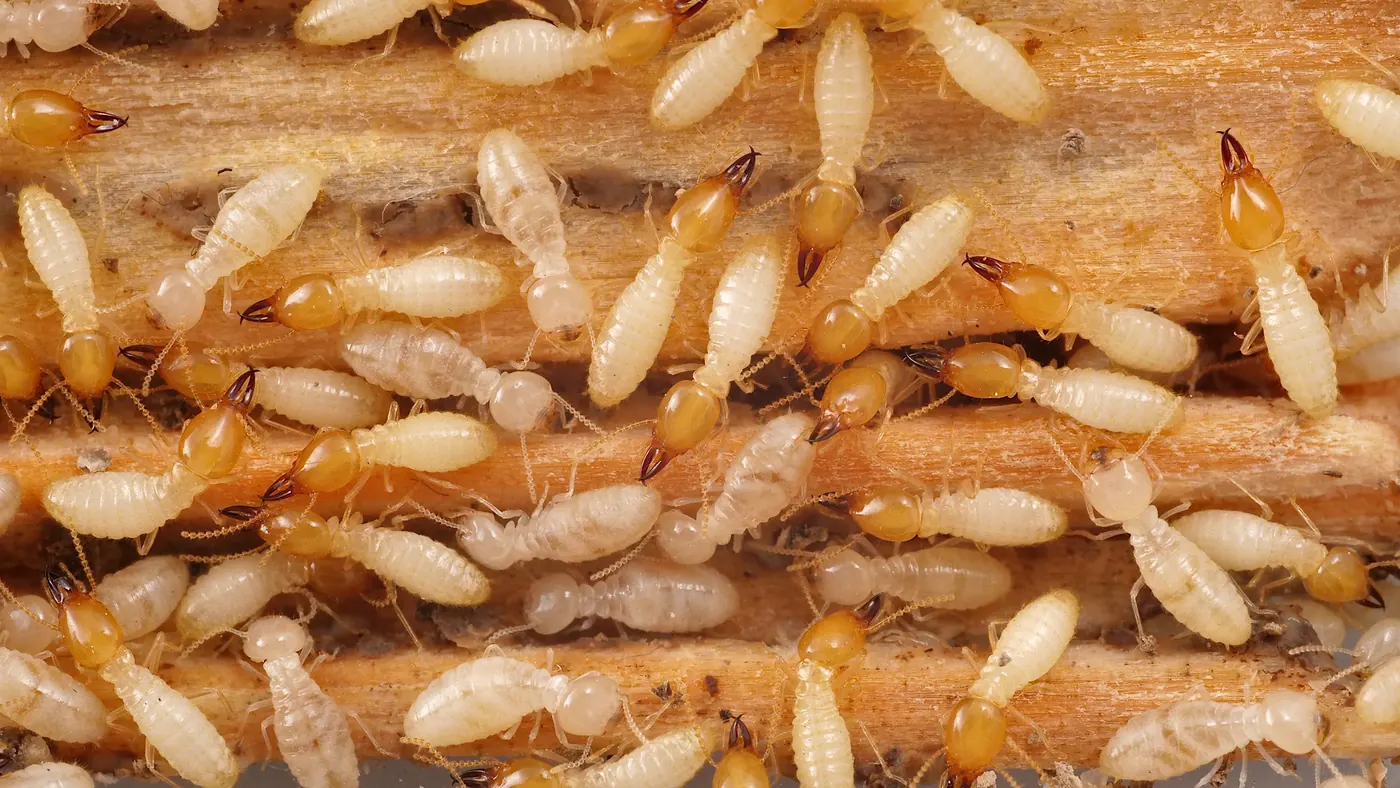
Termites cause more structural damage to buildings than most other pests combined. In Nairobi, subterranean termites are the primary concern — they attack from underground, often without any visible signs until significant damage has already occurred.
Types of Termites in Nairobi
- Subterranean Termites (Macrotermes, Coptotermes) — The most destructive species. They build underground colonies and enter buildings through soil-to-wood contact and cracks in foundations. Colonies can contain millions of individuals.
- Drywood Termites — Less common but can infest dry timber in roof structures without soil contact.
Early Warning Signs
- Mud tubes — Pencil-thin tunnels along foundations, walls, or joists. The clearest sign of subterranean termites.
- Hollow-sounding timber — Tap wooden floors or door frames. A hollow sound means termites have eaten the wood from inside.
- Discarded wings — Piles of wings near windowsills indicate a nearby colony.
- Frass — Small, sawdust-like pellets near wooden structures.
- Bubbling or uneven paint — Can indicate moisture from termite activity beneath surfaces.
Note: By the time you notice structural problems, the colony may have been active for 3–5 years. Annual professional inspections are strongly recommended.
Why DIY Treatment Does Not Work
Termite colonies cannot be eliminated with surface sprays. The queen — deep underground — is completely inaccessible to surface treatments. Killing visible workers has no lasting effect. Effective treatment requires a continuous soil termiticide barrier or a professional bait system.
Pre-Construction Treatment
The most cost-effective approach is pre-construction soil treatment — applying a termiticide barrier before the foundation slab is poured. This protects the entire building for 5–10 years and is far cheaper than treating an active infestation later.
Need Professional Help?
Kowa Pest Solutions is Nairobi's PCPB-licensed pest control expert. Same-day service available across Nairobi.